Project Type
Role
Timeline
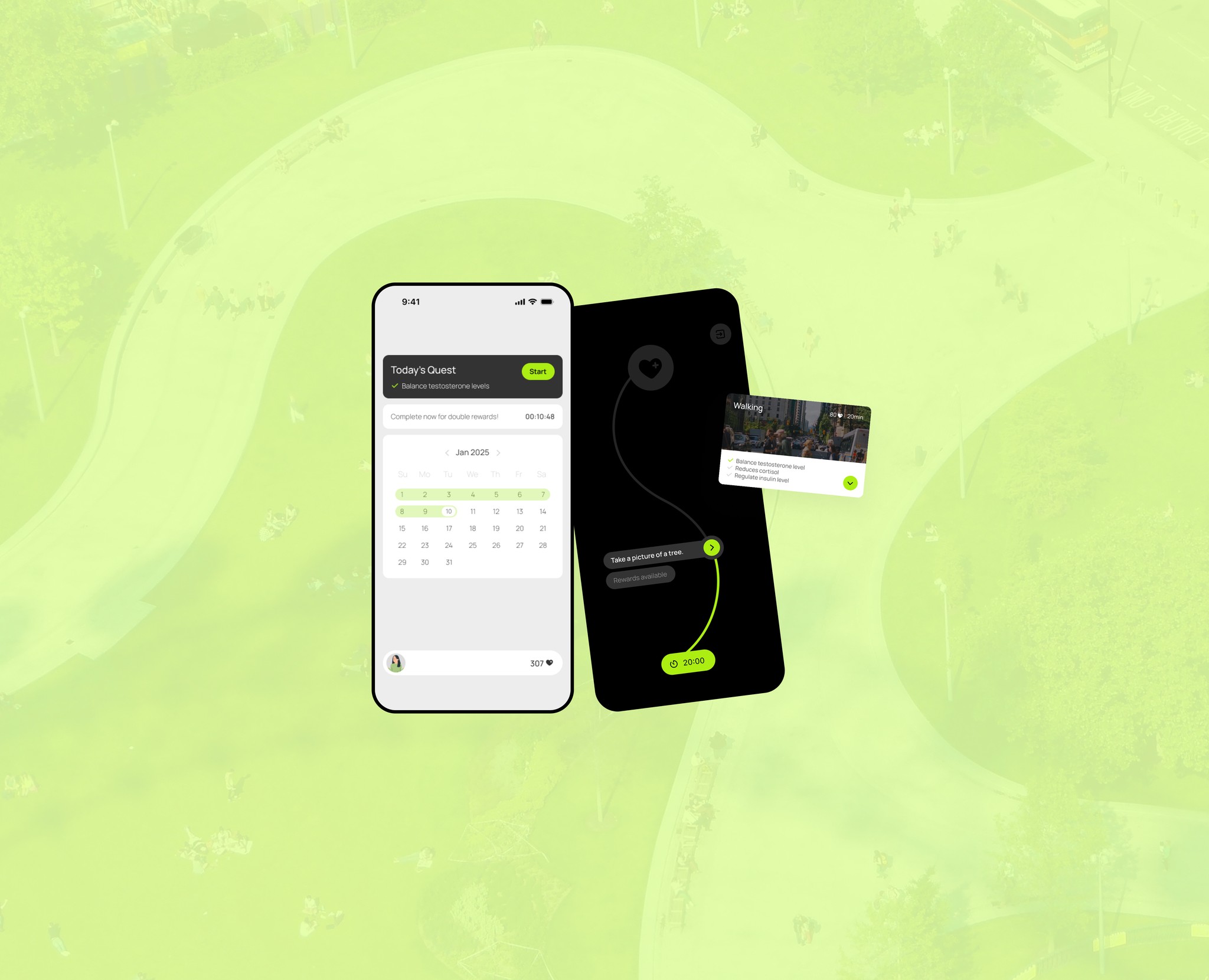
In the United States, 6/10 adults have a chronic disease, and 4/10 have two or more. These long-term health conditions are advised to adopt daily wellness routines however, people challenges to stay consistent with these habits due to lack of engagement, restlessness, or unclear goals.
HealQuest is designed to help people with chronic conditions develop consistent habits through personalized health-based activity quests.
Daily adaptive quests
Start your day with a personalized set of wellness quests to choose from, each one tailored to support your health needs and flexible enough to fit your mood or energy.
Enrichment tasks
Go beyond your main quest with enrichment tasks; small, meaningful actions that spark mindfulness, creativity, or connection. Each one brings a little extra joy and depth to your daily routine.
Feel the win everyday
From the first stretch to the final breath, every completed quest fuels momentum. HealQuest makes progress feel good, turning healthy habits into daily wins.
Track progress & gain insights
Check your quest history, badges, and streaks all in one personalized dashboard. See how far you’ve come, and celebrate the progress you’re making, one day at a time.
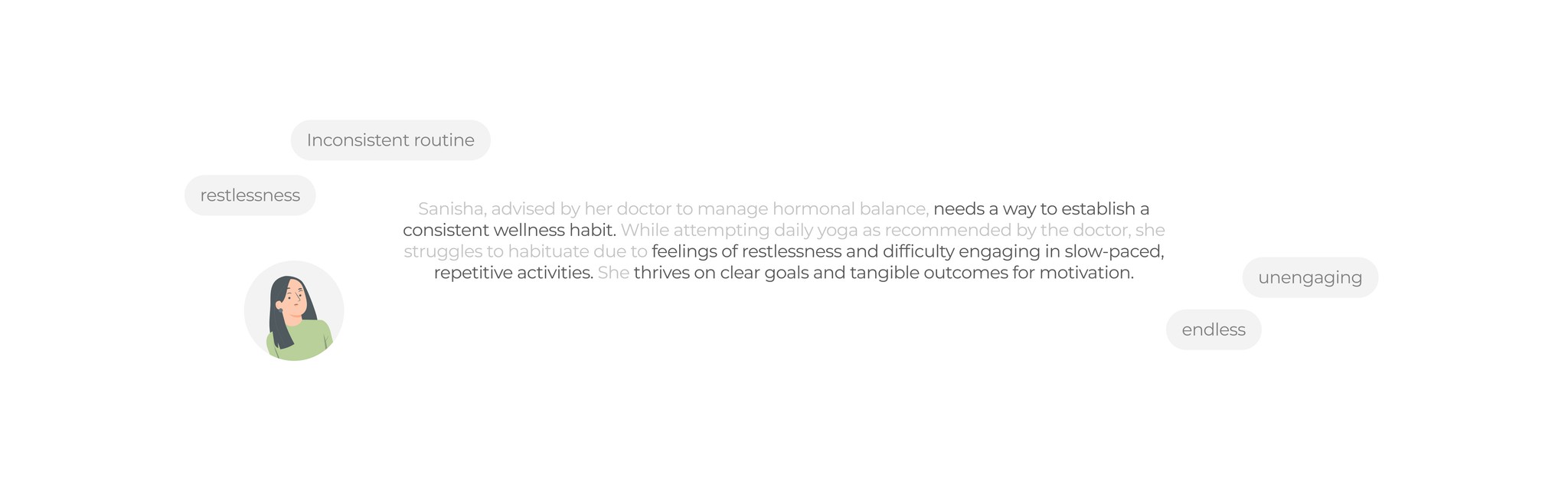
To understand the challenges faced by individuals managing long-term health conditions, I conducted user interviews to analyze behavior patterns and explore existing strategies around habit-building in wellness routines. A primary interview with a person who manages PCOS, provided an early foundation for the project. The participant's experience highlighted common frustrations and behavioral challenges that were later echoed across broader research findings.
One key insight was the difficulty in maintaining doctor-recommended activities when they don’t align with a user’s personal tendencies or preferences. Many individuals expressed that while they wanted to follow medical advice, they often lacked knowledge about alternative options that could offer similar health benefits. There was a clear desire for more structured and goal-oriented routines, along with a strong response to visual feedback that communicates progress or impact. When users understood the benefit of a task, especially when presented in a motivating and tangible way, they were more likely to engage with it, even if the activity itself wasn’t something they naturally gravitated toward.
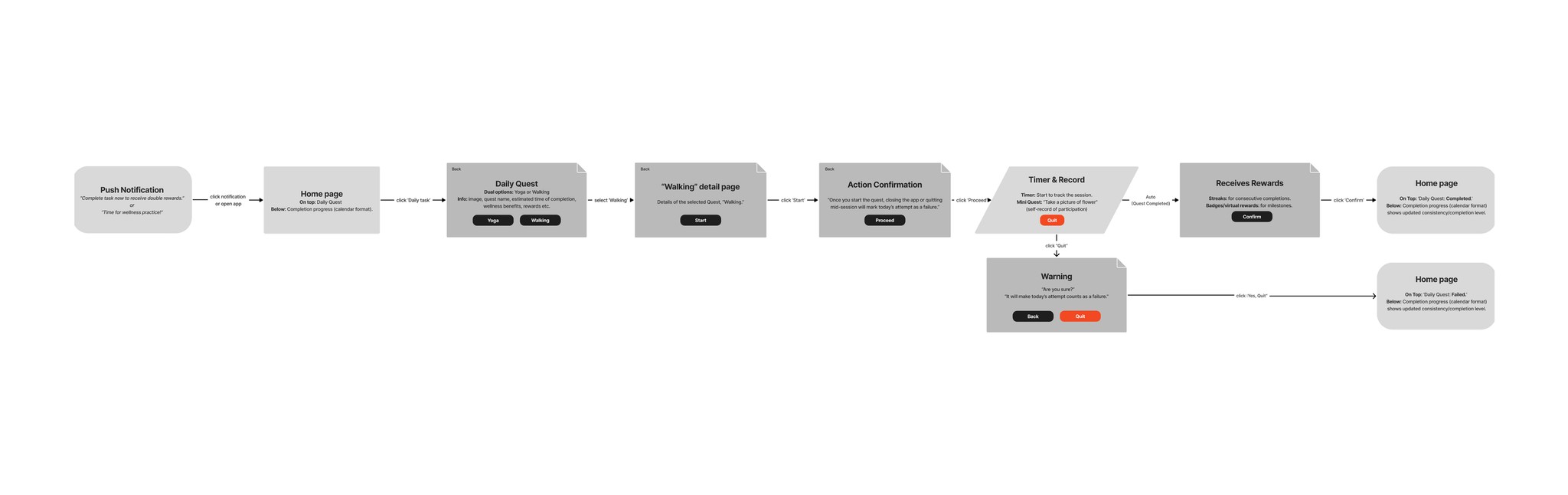
With insights from research, I began shaping HealQuest’s interaction model around flexibility and motivation. Rather than assigning a fixed daily routine, the app gives users the power to choose from multiple quests that align with both their health goals and personal preferences. Key interactions, like the daily quest notification, activity selection, and celebratory feedback, were designed to support habit-building without pressure.
Streak tracking, progress visuals, and milestone badges were integrated as lightweight feedback mechanisms to maintain a sense of momentum. The task flow was laid out to balance guidance with autonomy, keeping the app intuitive and easy to commit to on a daily basis.
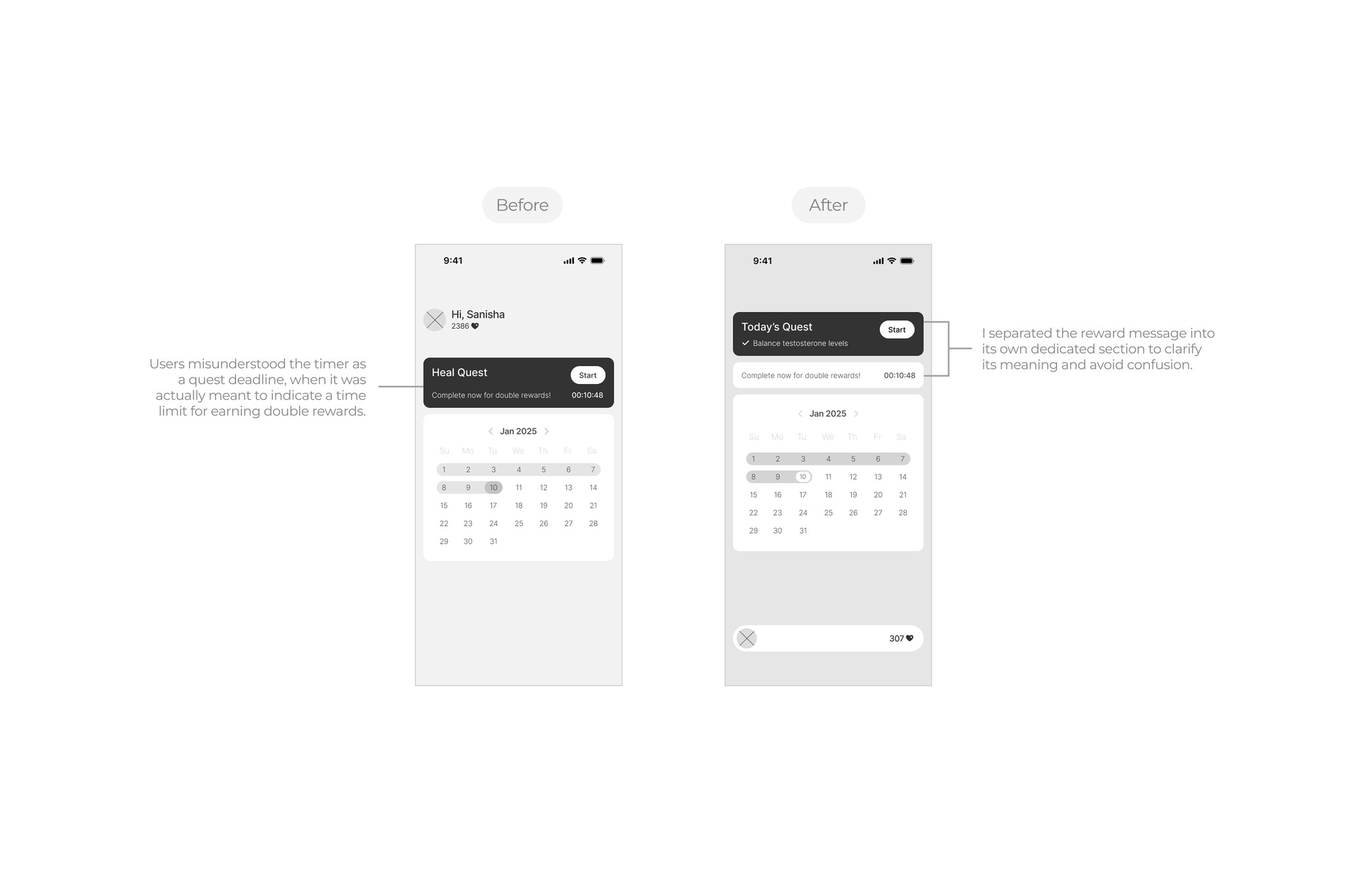
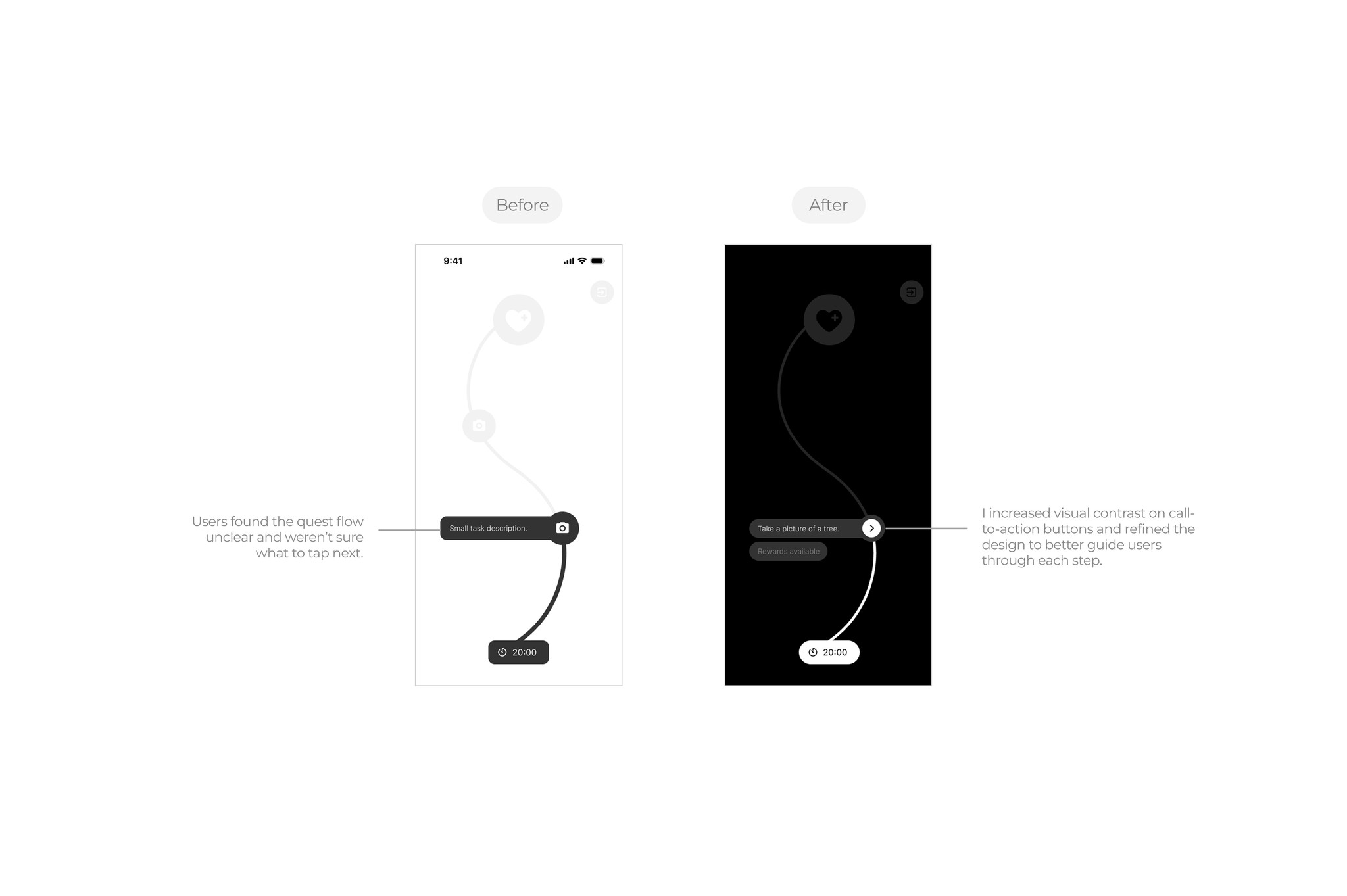
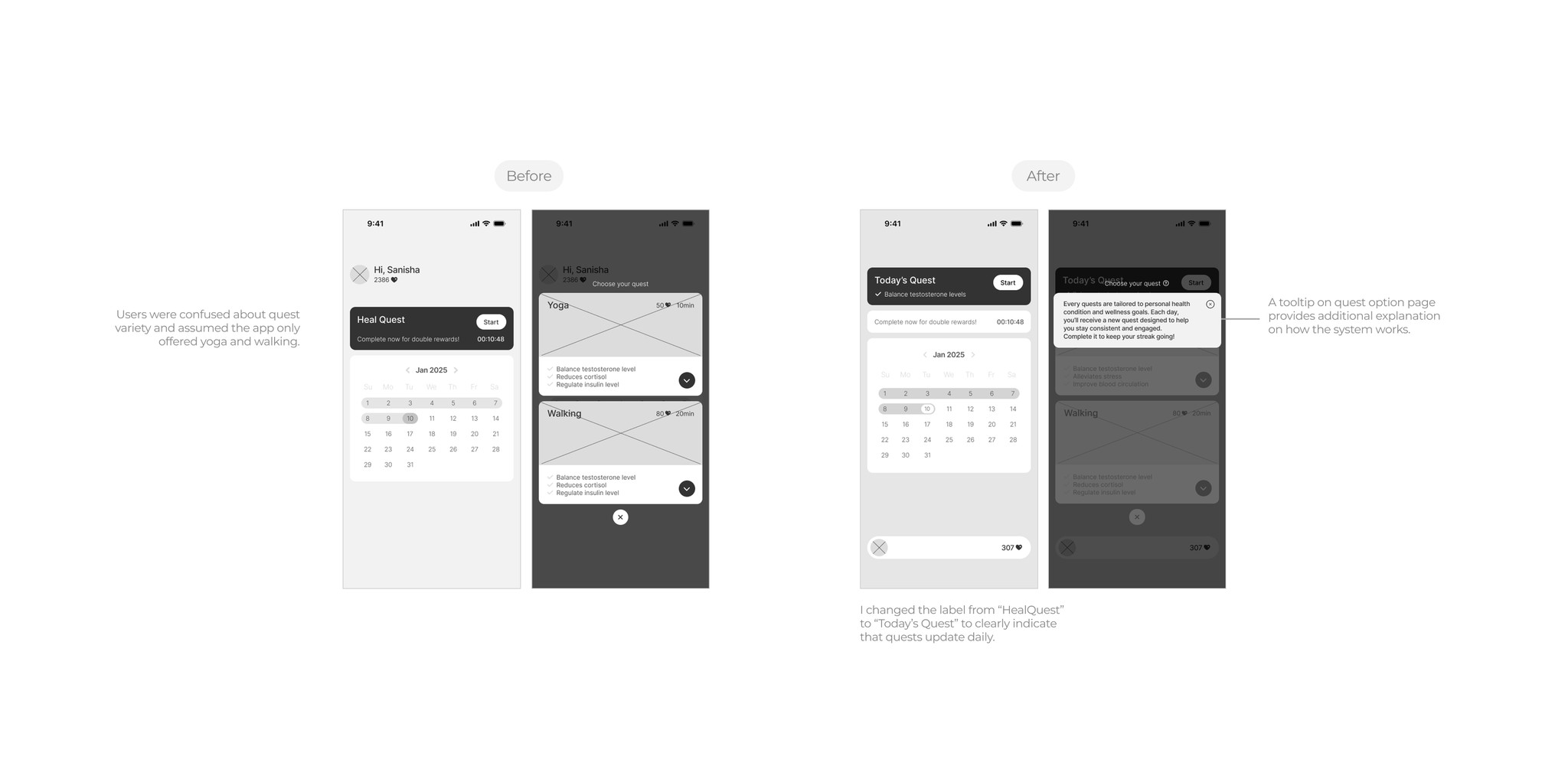
To validate the concept, usability tests were conducted with the main interview participant. Feedbacks confirmed that the app was easy to understand and motivating. However, the test also revealed areas for refinement in visual communications.
Final Prototype