Project Type
Role
Timeline

416-Flowers is a Toronto-based online flower shop that operates without a physical storefront. As such, the website serves as both the store and the brand’s primary customer touchpoint. This redesign project aimed to improve the website’s usability, clarity, and trustworthiness by addressing key pain points and better aligning the digital experience with users’ emotional and practical needs when sending flowers.
The Problem
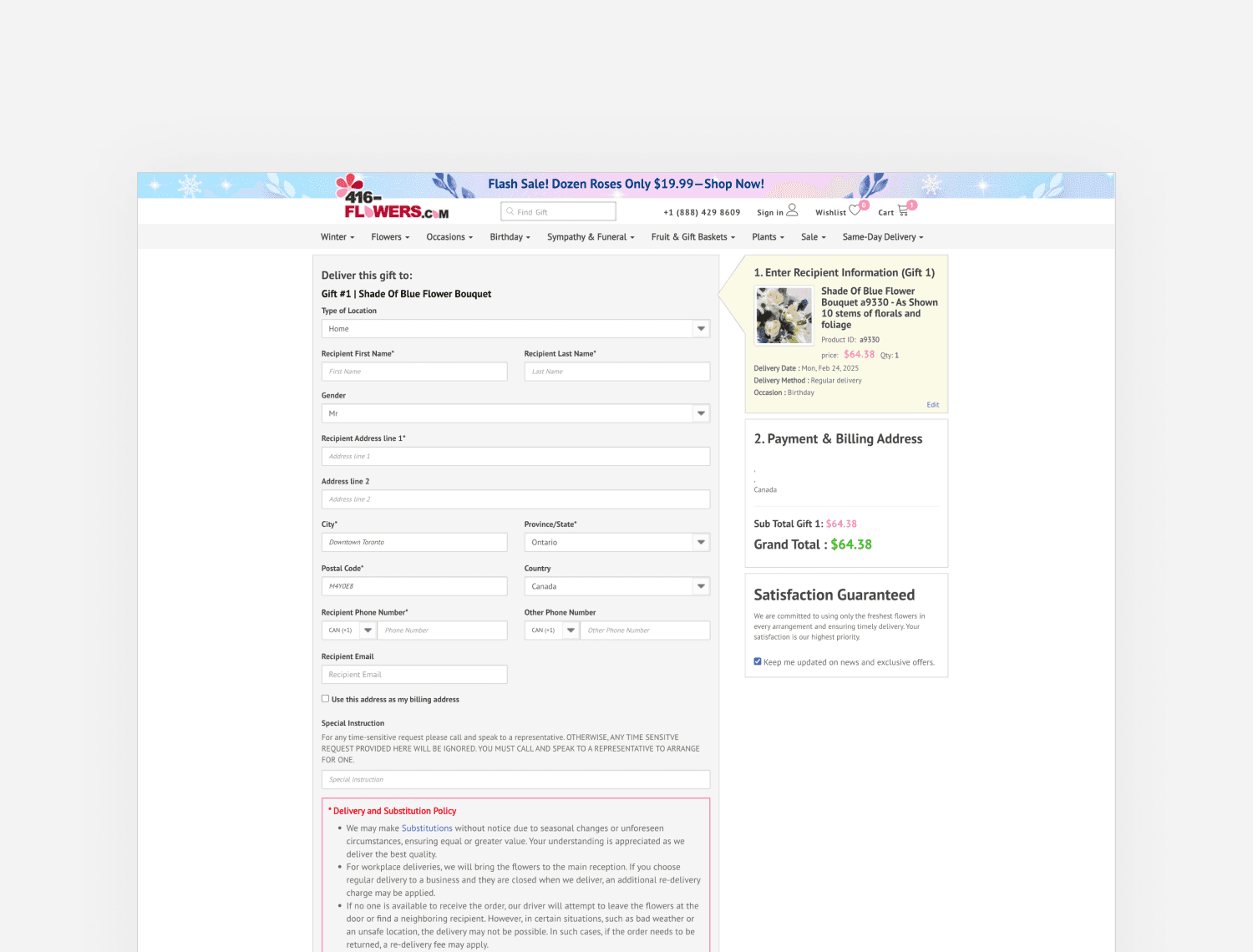
The original website had weak visual hierarchy, unclear delivery availability, limited filtering, and outdated design. These issues made it difficult for users to navigate, evaluate products confidently, or trust the credibility of store, especially when sending flowers as thoughtful gifts.
(original website shown below)
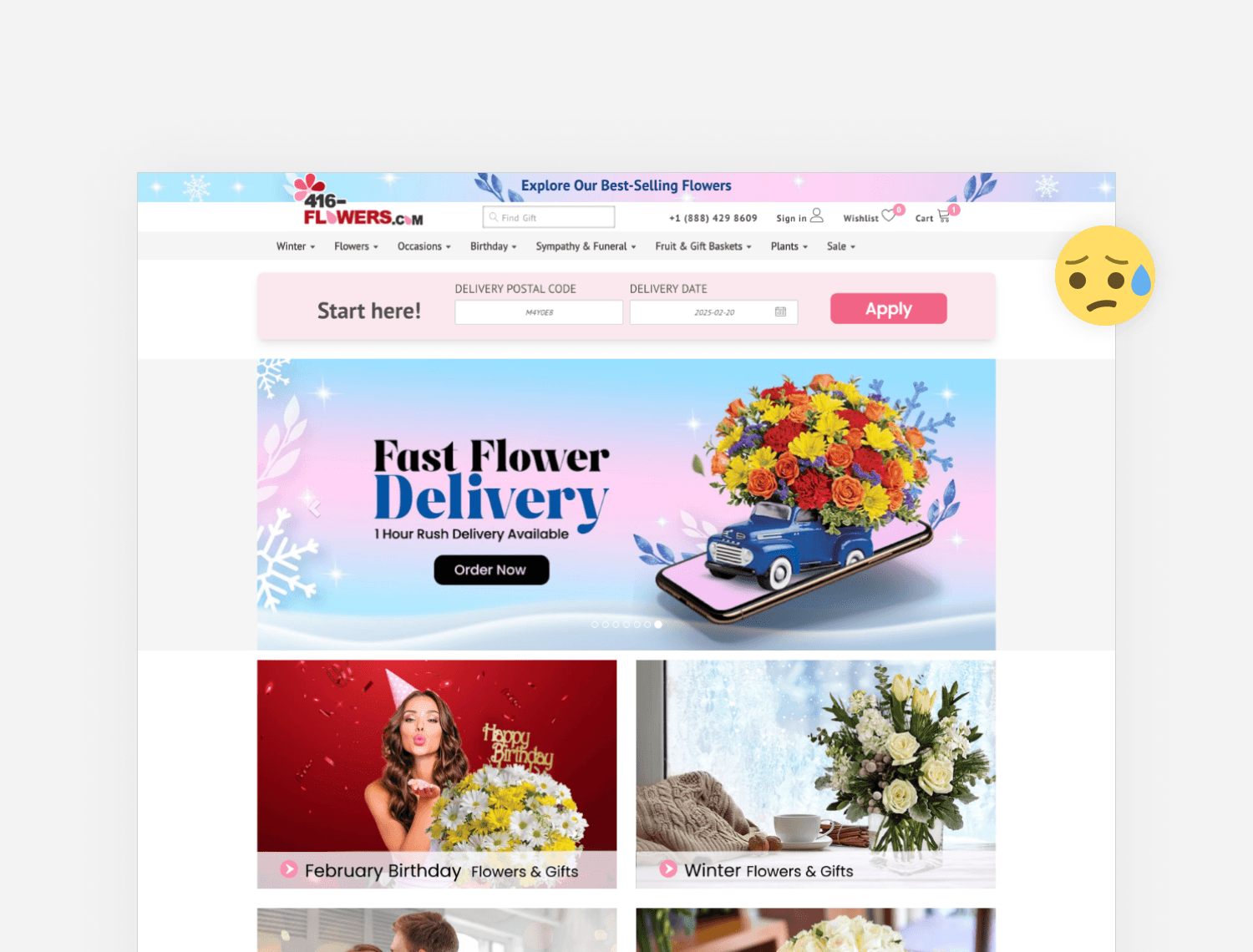
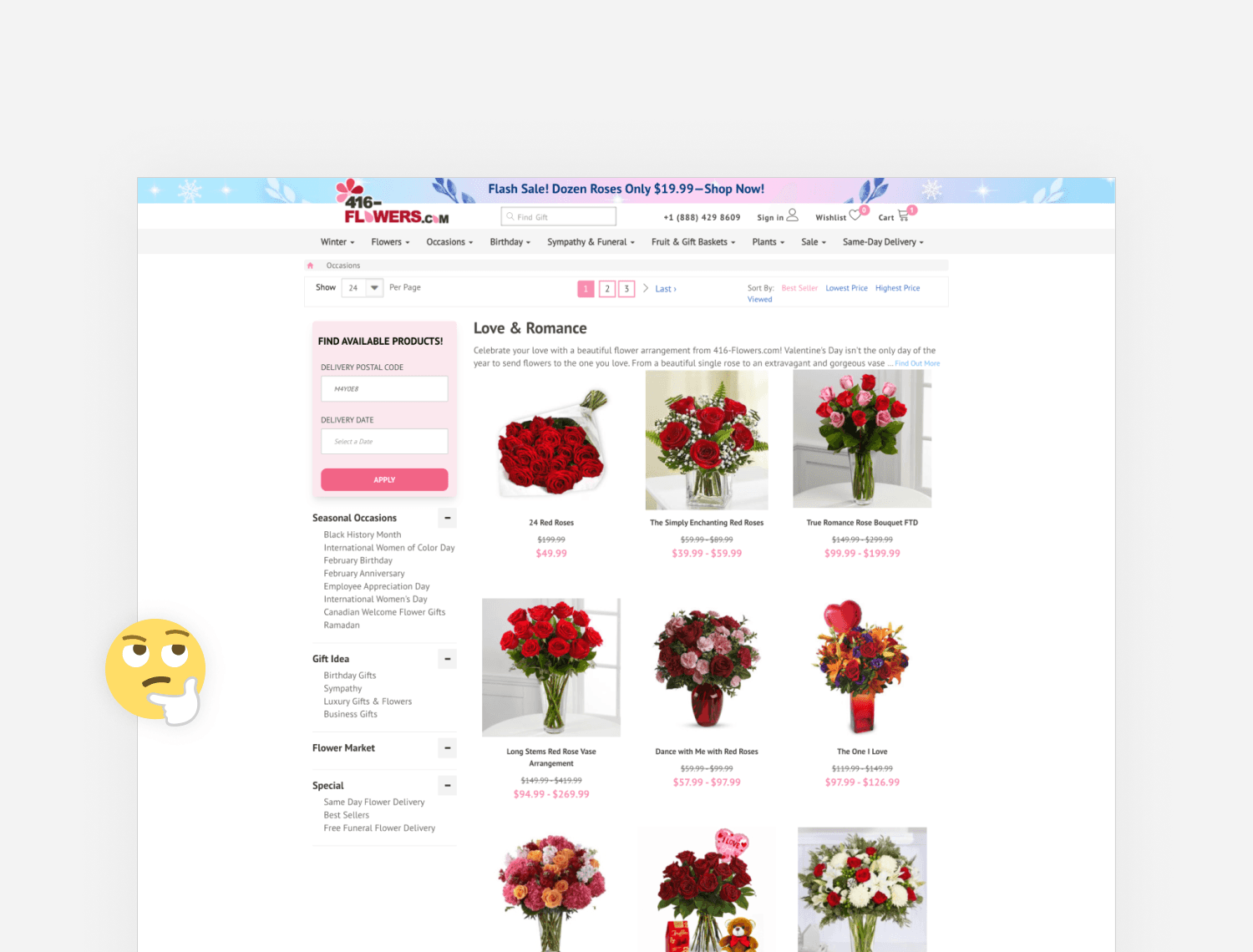
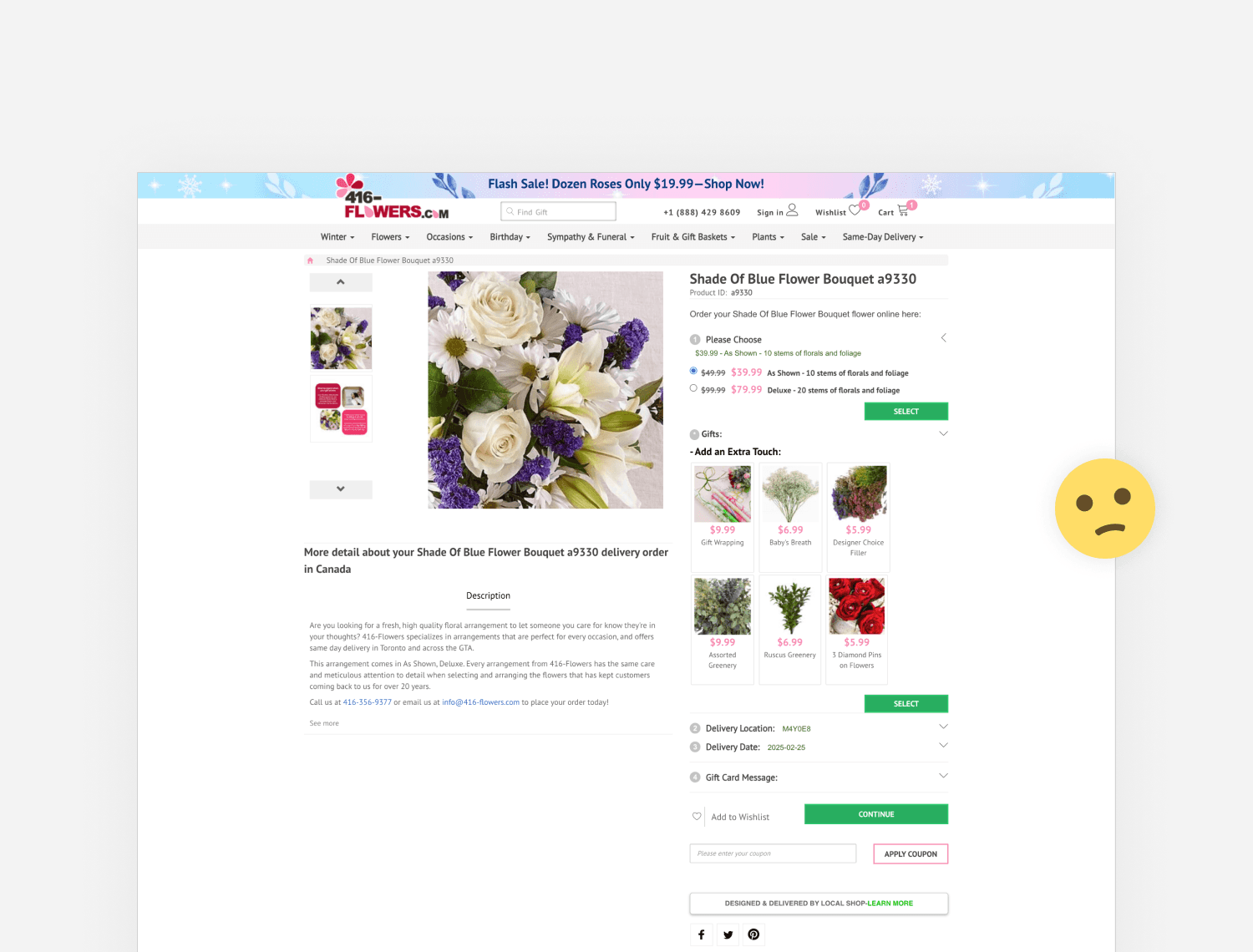
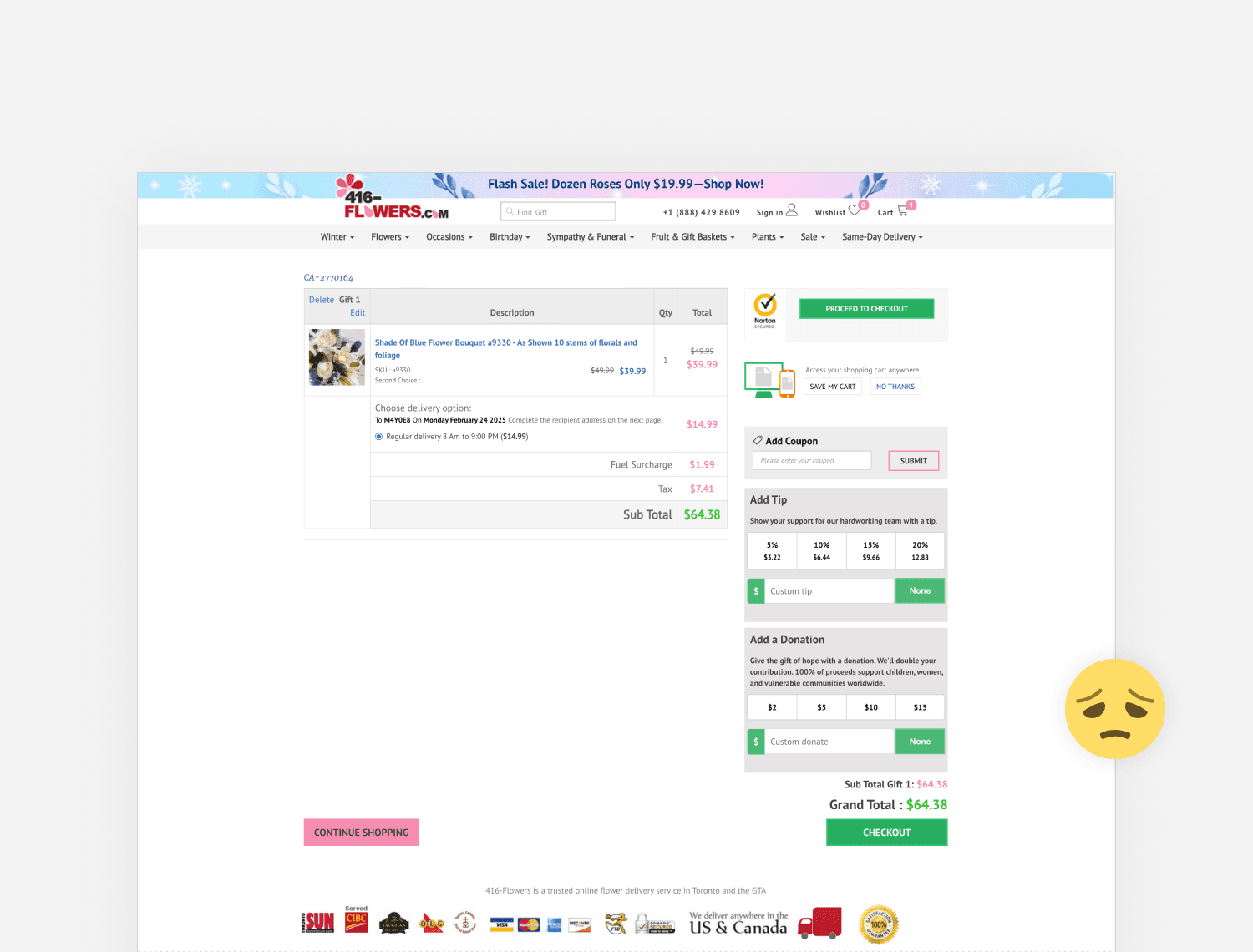
Redesign
The goal was to create a more intuitive, emotionally resonant, and reliable e-commerce experience from browsing to checkout.
Occasion-first Navigation
The navigation bar was restructured around the categories most commonly used by customers, with “Occasion” given its own prominent CTA presence on the homepage. This allows users to intuitively access the most relevant categories, streamlining their browsing experience and aligning with how people typically shop for flowers.
Check Delivery Availability Early
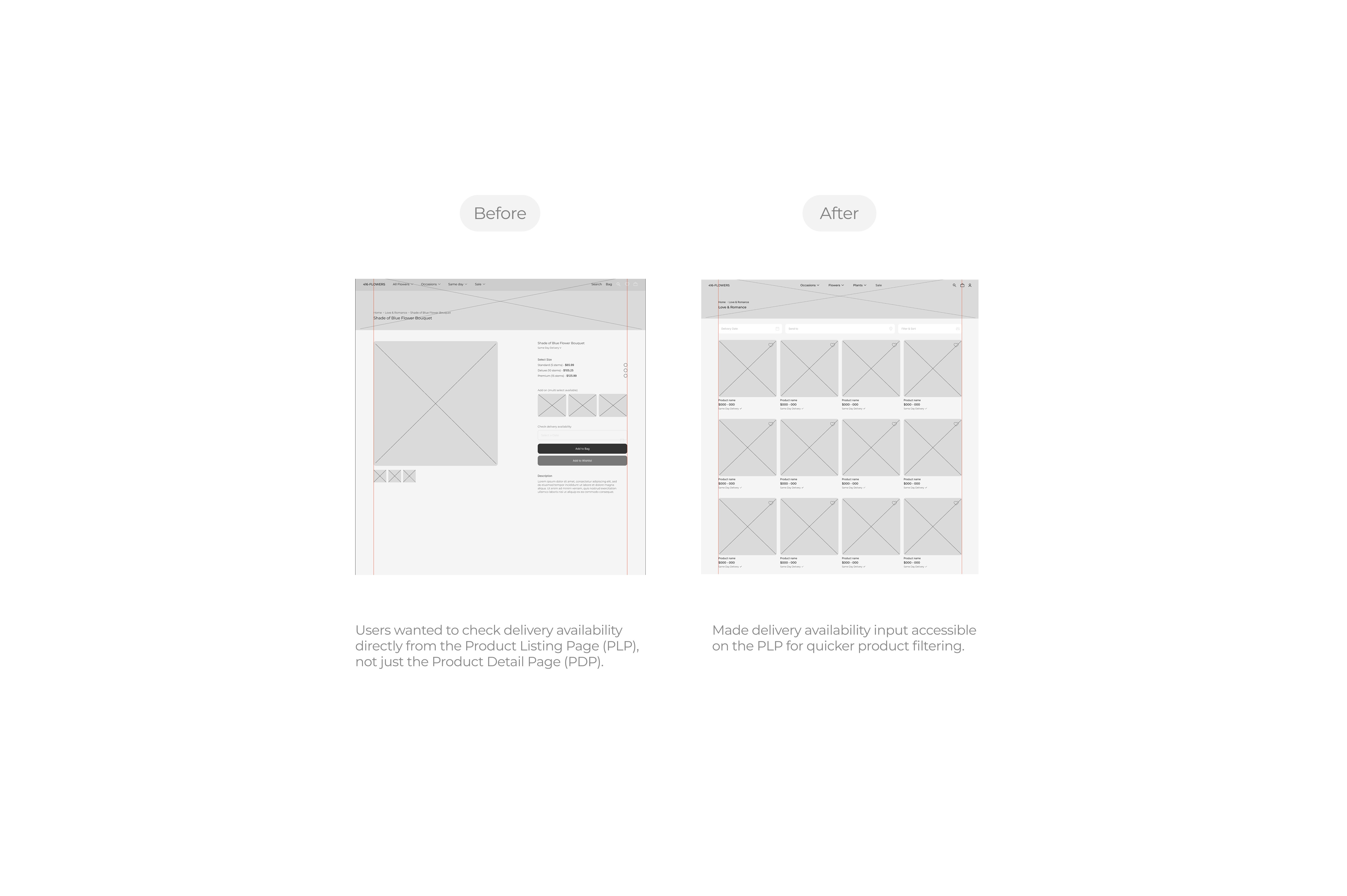
Instead of navigating through multiple pages, users can input delivery date and location on the Product Listing Page (PLP) to instantly view available options.
Size & Add-on Previews
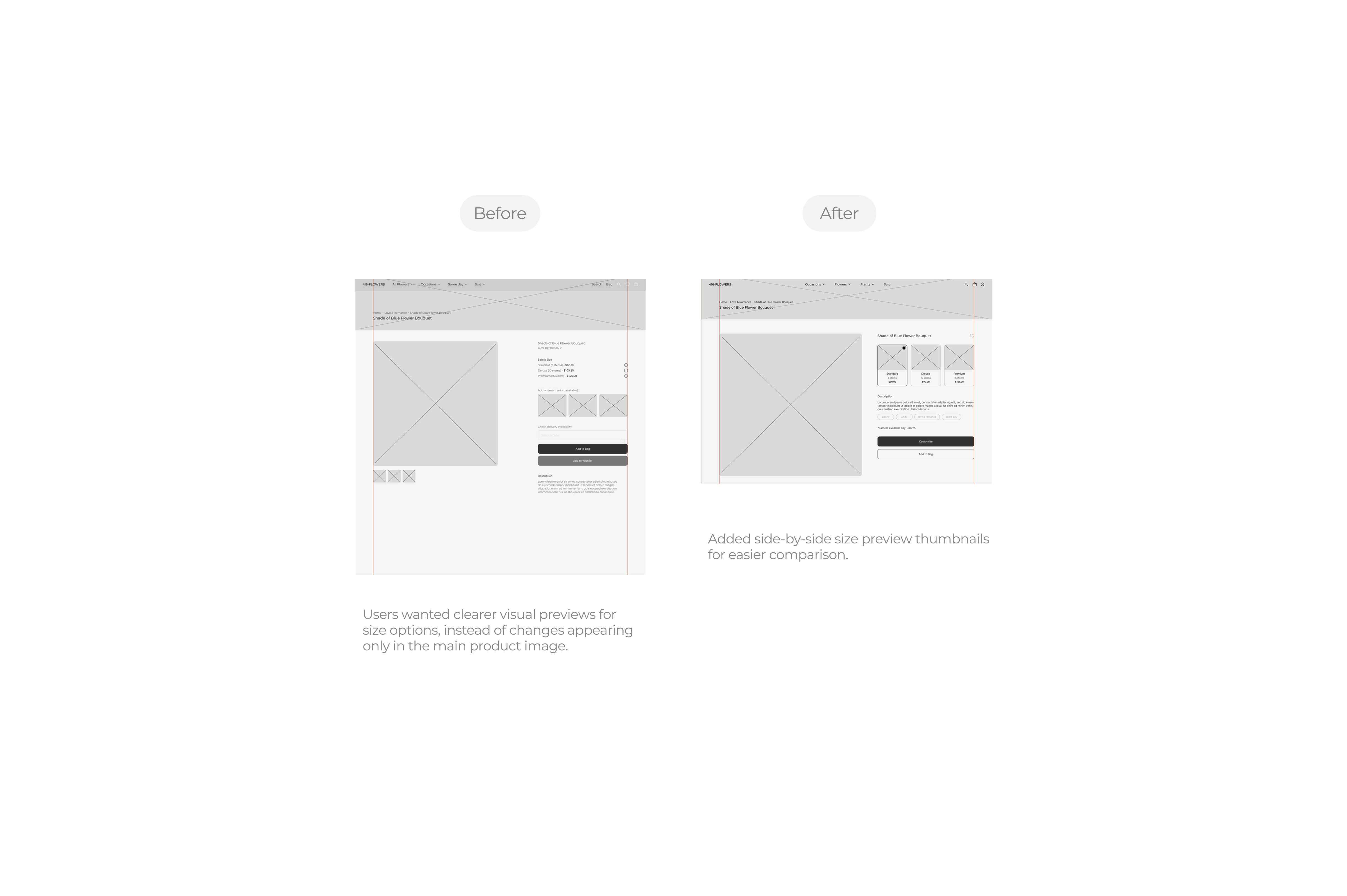
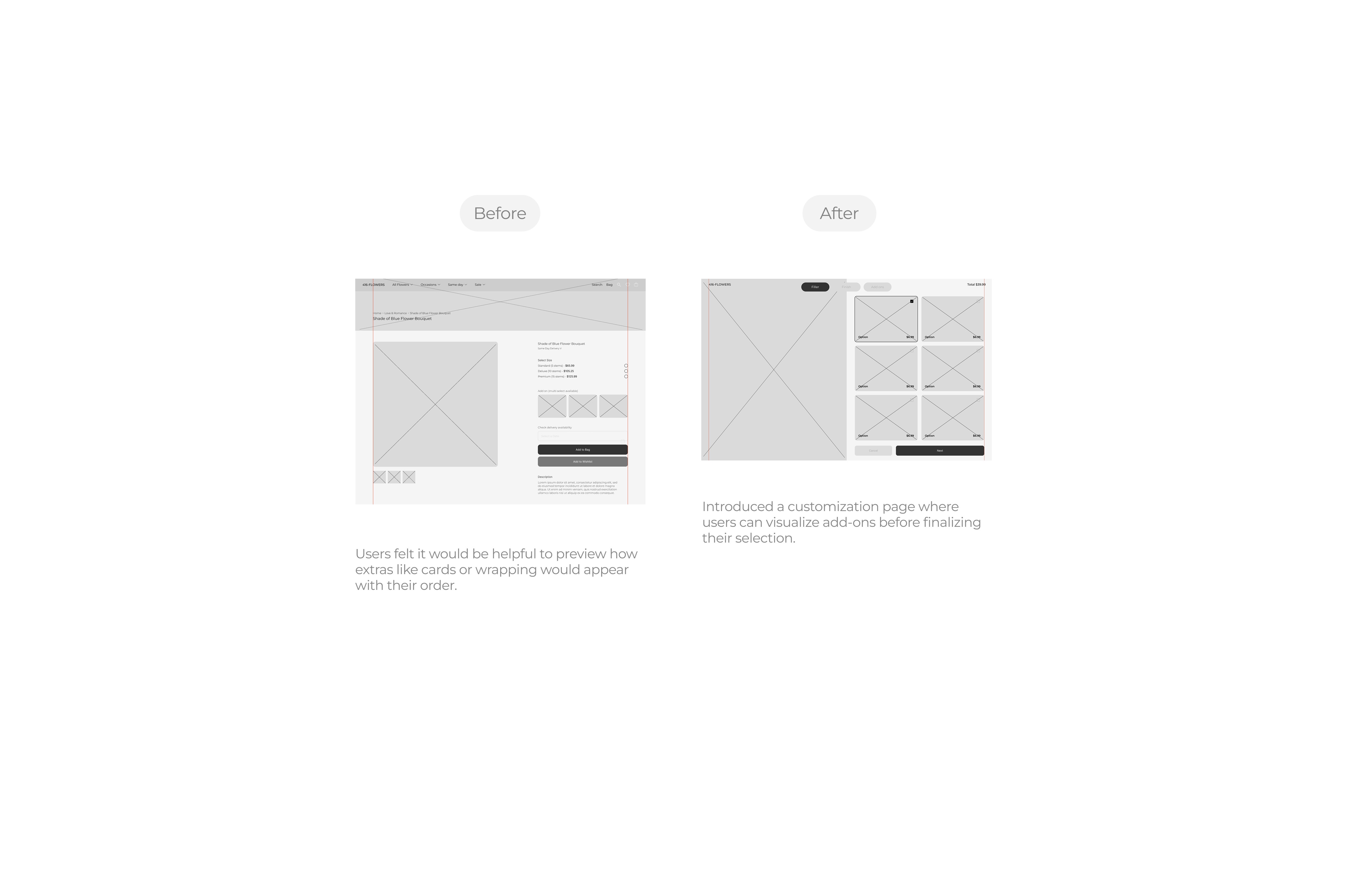
Clear visual previews for bouquet size options and customizations empower customers to confidently choose their gift while also creating a more engaging and memorable shopping experience
Keyword-based Search
Each product is tagged with keywords (e.g., “romantic,” “white,” “spring”), allowing users to search based on visual or contextual cues rather than memorizing product names.
Confirmation Service
To build trust and address user concerns, a confirmation photo feature could be offered, allowing customers to see the final bouquet before delivery. This would reassure users that the product meets expectations and strengthen confidence in the overall experience.
Understanding
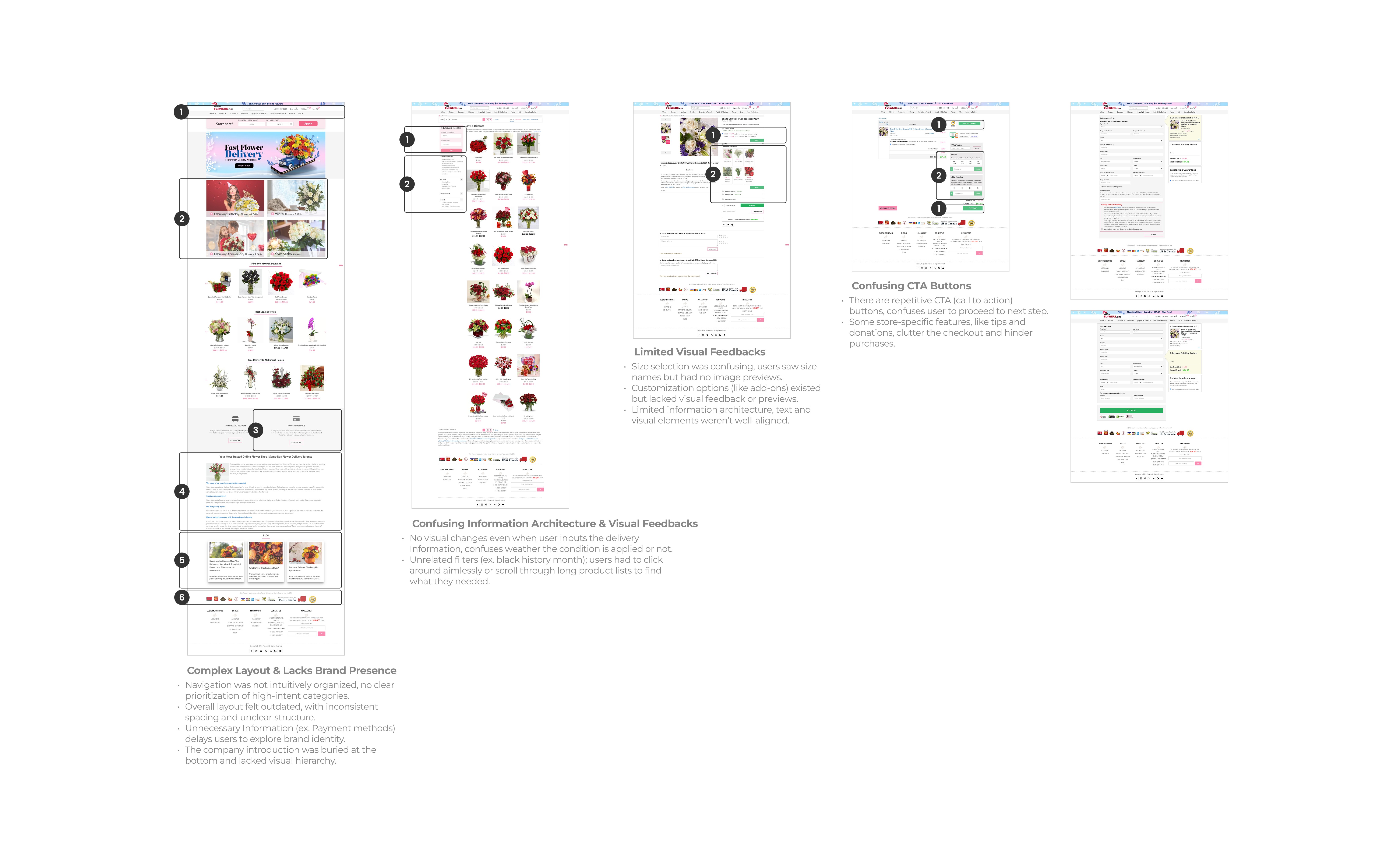
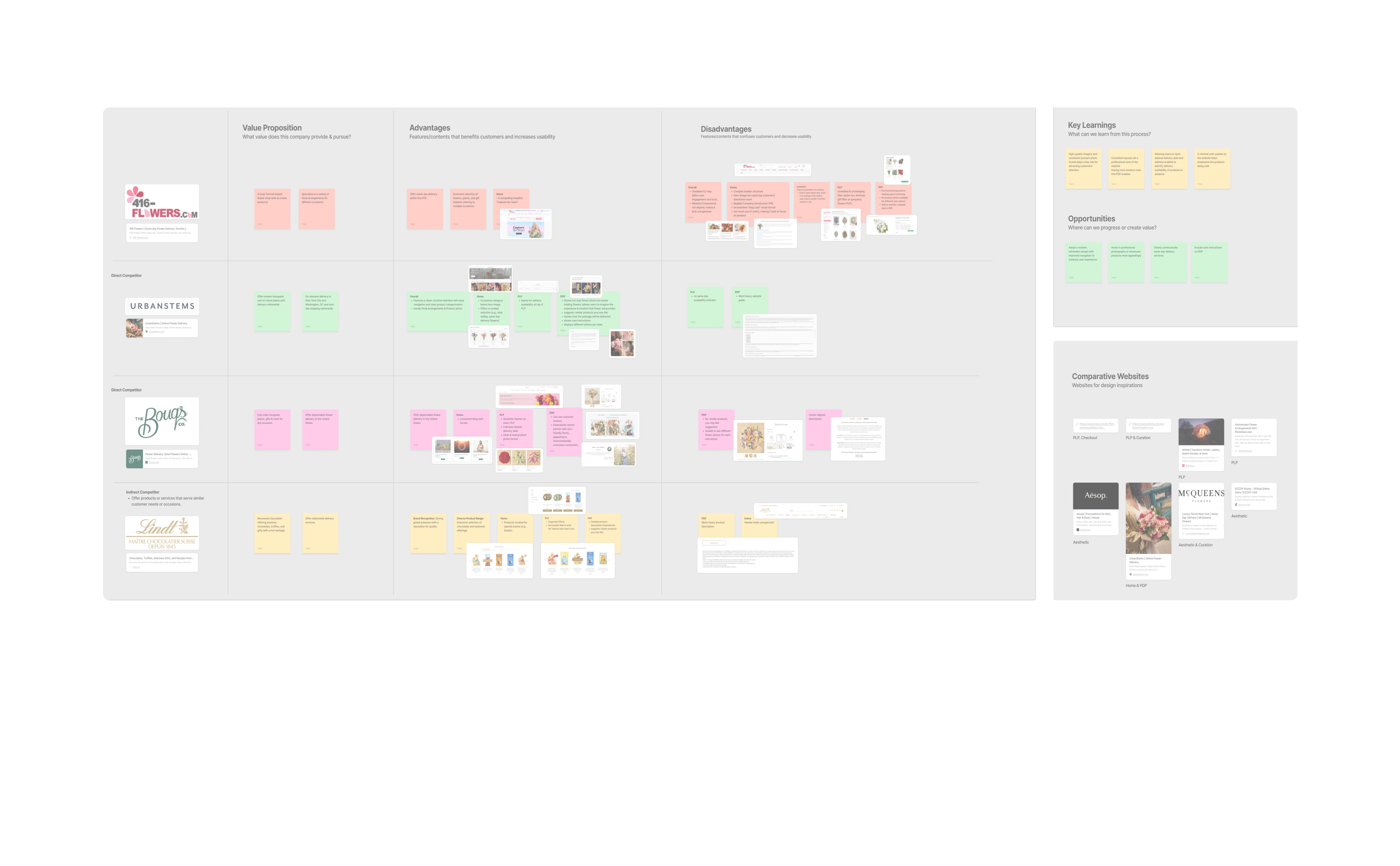
The research began with an audit of the original 416-Flowers website to understand its current structure, existing features, and limitations. Competitive analysis was also conducted to examine the strengths and weaknesses of other flower shop websites. This helped me better understand the unique nature of online flower shopping and identify usability gaps and opportunities for improvement specific to 416-Flowers.
View detailed audit & comp analysis
Interviews & Card Sorting
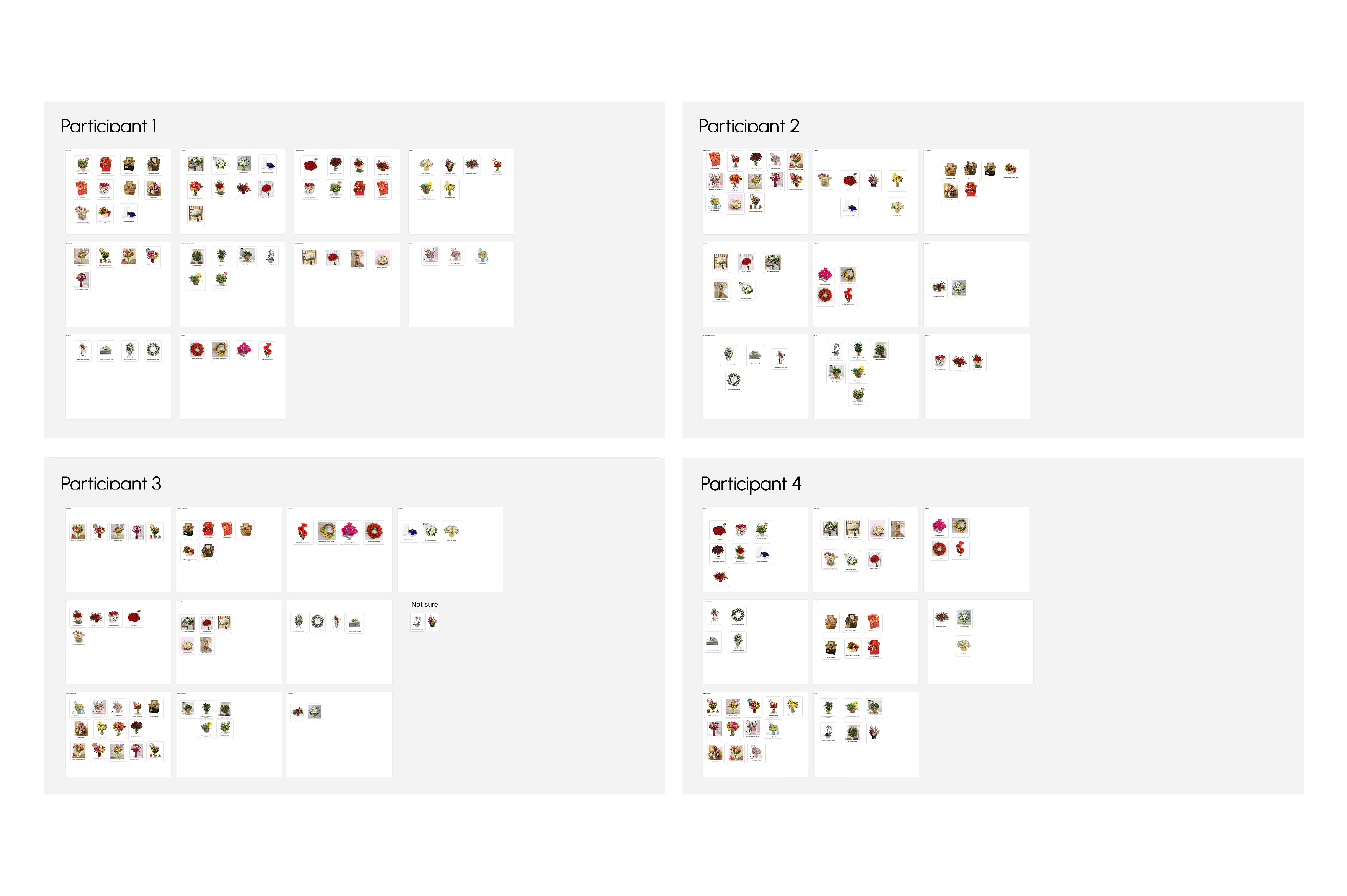
To understand real user needs, I interviewed four participants with experience ordering flowers online, focusing on their shopping behavior, emotional drivers, and challenges in selecting products or stores. A card sorting activity was also conducted to explore how users naturally categorize flowers, which informed a more intuitive and user-friendly navigation structure.
Affinity Mapping & Persona
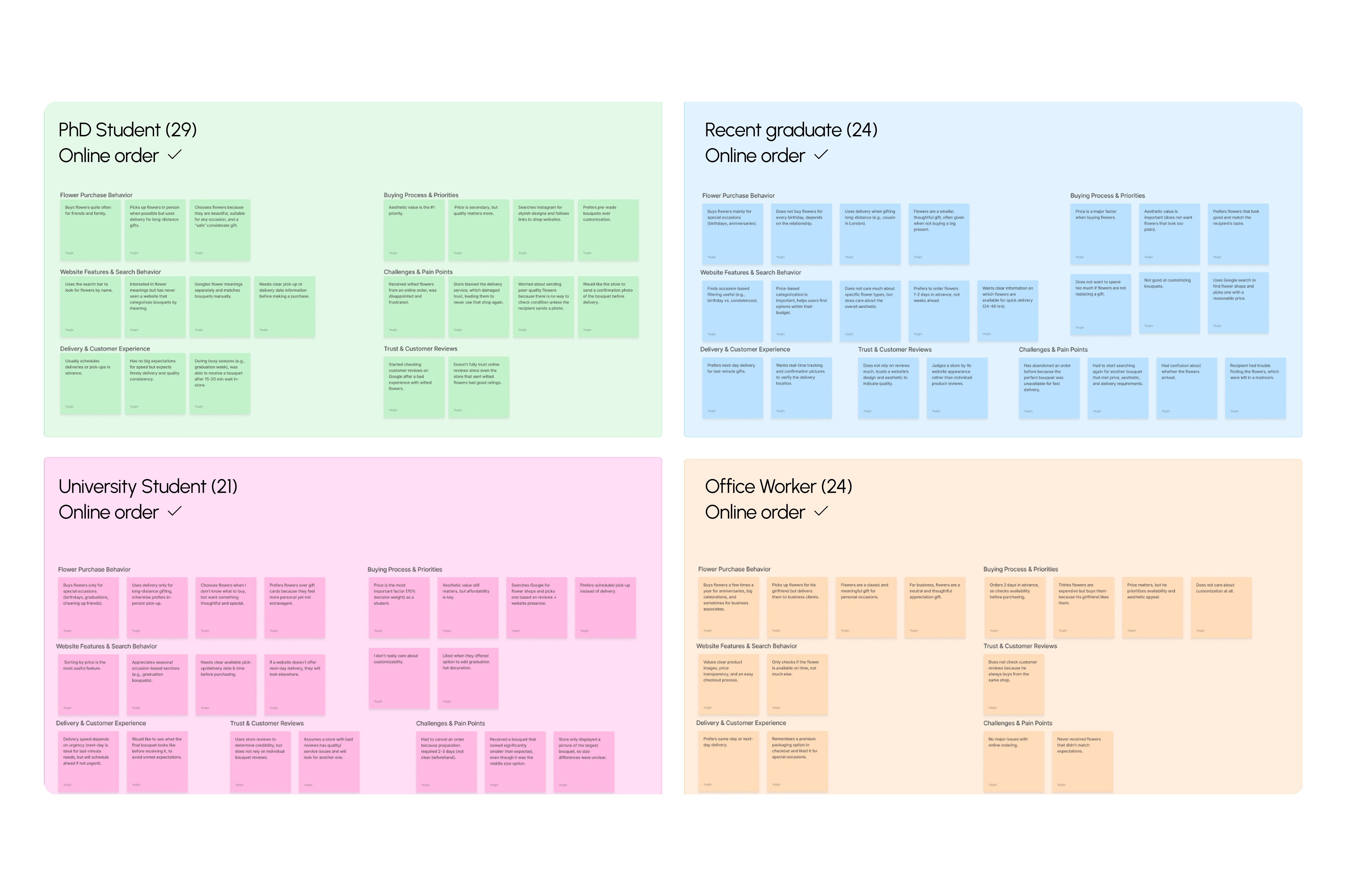
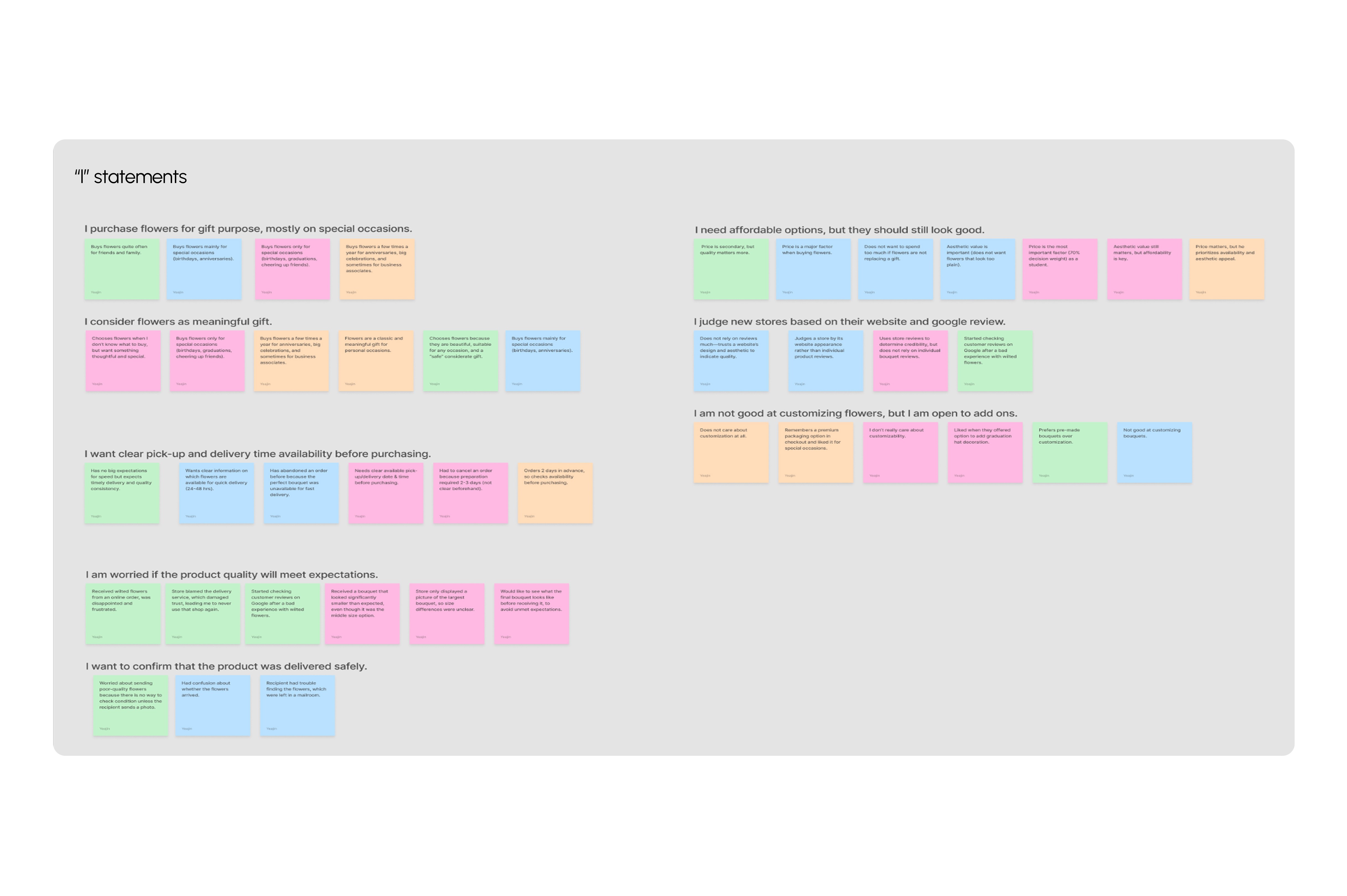
To understand real user needs, I conducted interviews with four participants who had experience ordering flowers online. The goal was to explore users shopping behavior, emotional motivations, and pain points, particularly how they select flower shops, what influences their trust, and how they navigate the purchase process.
From these conversations, I gathered over 80 feedback points, which I organized through affinity mapping to identify behavioral patterns and shared frustrations. Key insights revealed that users shop primarily for gifting on special occasions, rely heavily on visuals and website tone for trust, and value simplicity in customization.
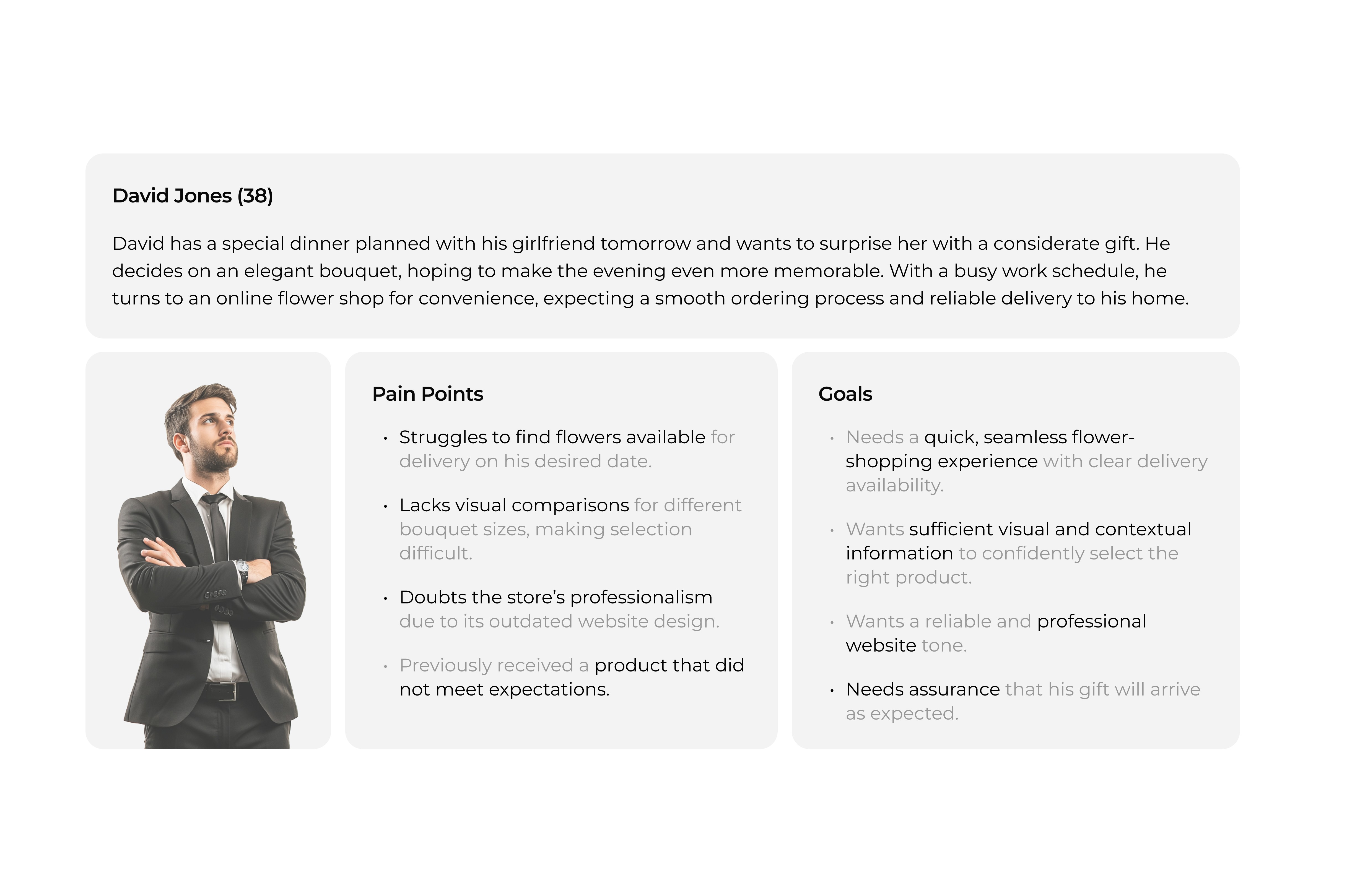
These findings led to the creation of a primary persona, David, a busy professional who wants a fast, reliable, and emotionally meaningful way to purchase flowers online. His needs, goals, and concerns guided the design direction moving forward.
Design Opportuniy
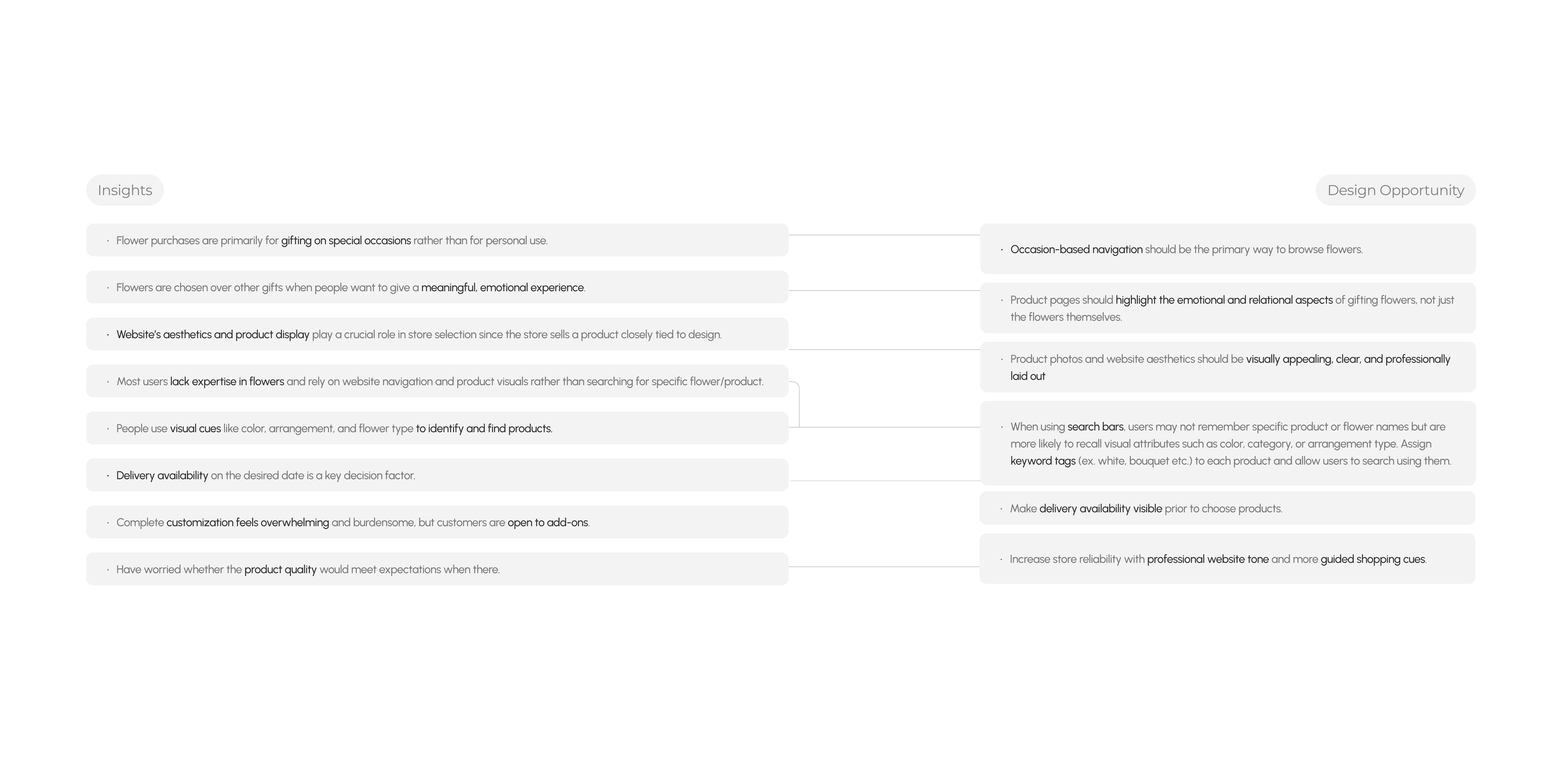
Insights from the interviews and affinity mapping revealed several opportunities to improve the 416-Flowers website experience. Users primarily shop by occasion and rely on visual cues, so the navigation needed to reflect that behavior. Many struggled with unclear delivery information and lack of transparency around bouquet sizes and add-ons, which highlighted the need for visual previews and early delivery filtering. Additionally, users tended to search by descriptive terms like color or sentiment rather than product names, suggesting the value of keyword-based search. Lastly, trust in the brand was closely tied to the website’s tone and presentation, emphasizing the importance of a professional, emotionally engaging layout. These insights directly informed the design priorities throughout the project.
Site Map & Task Flow
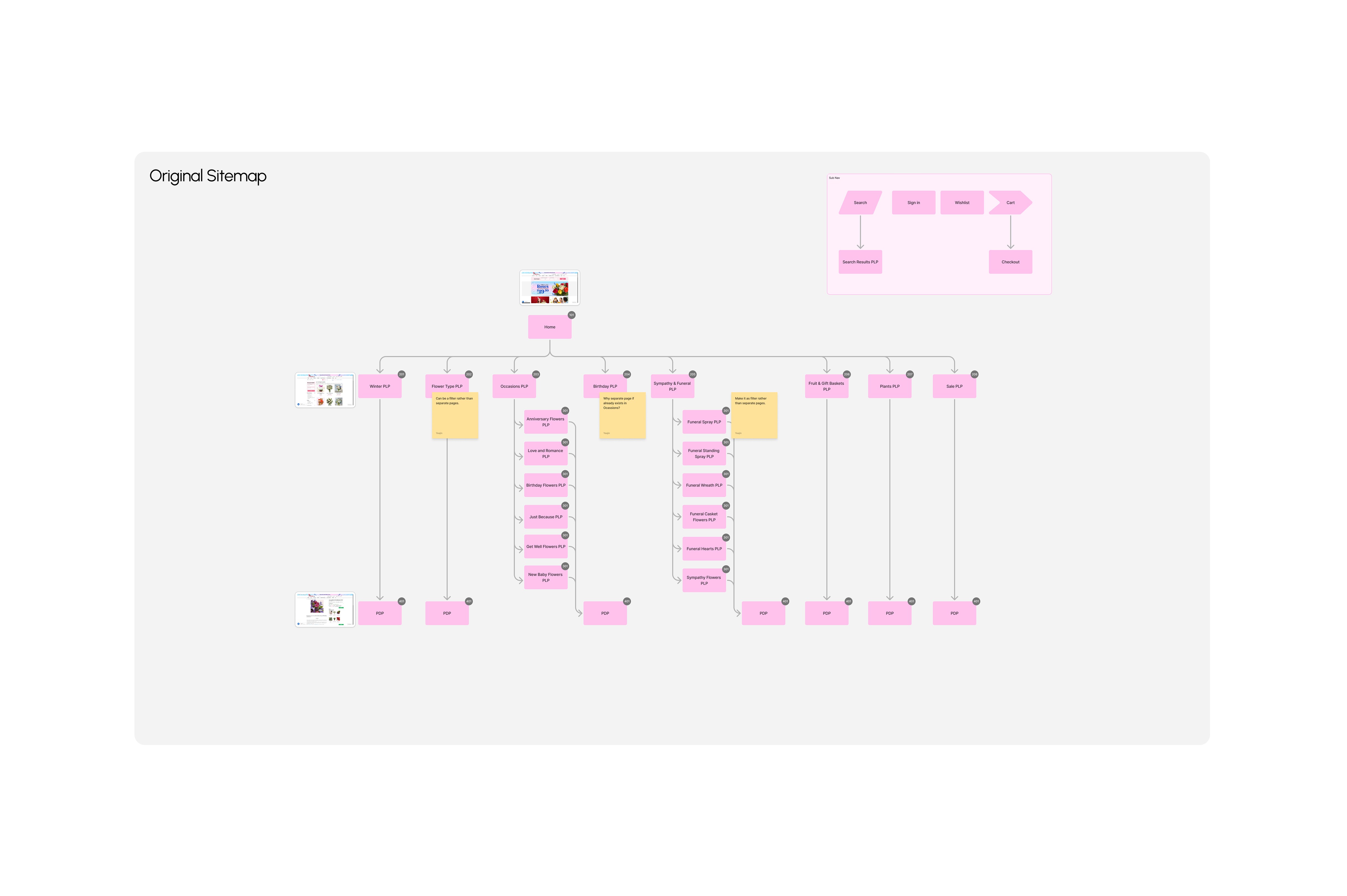
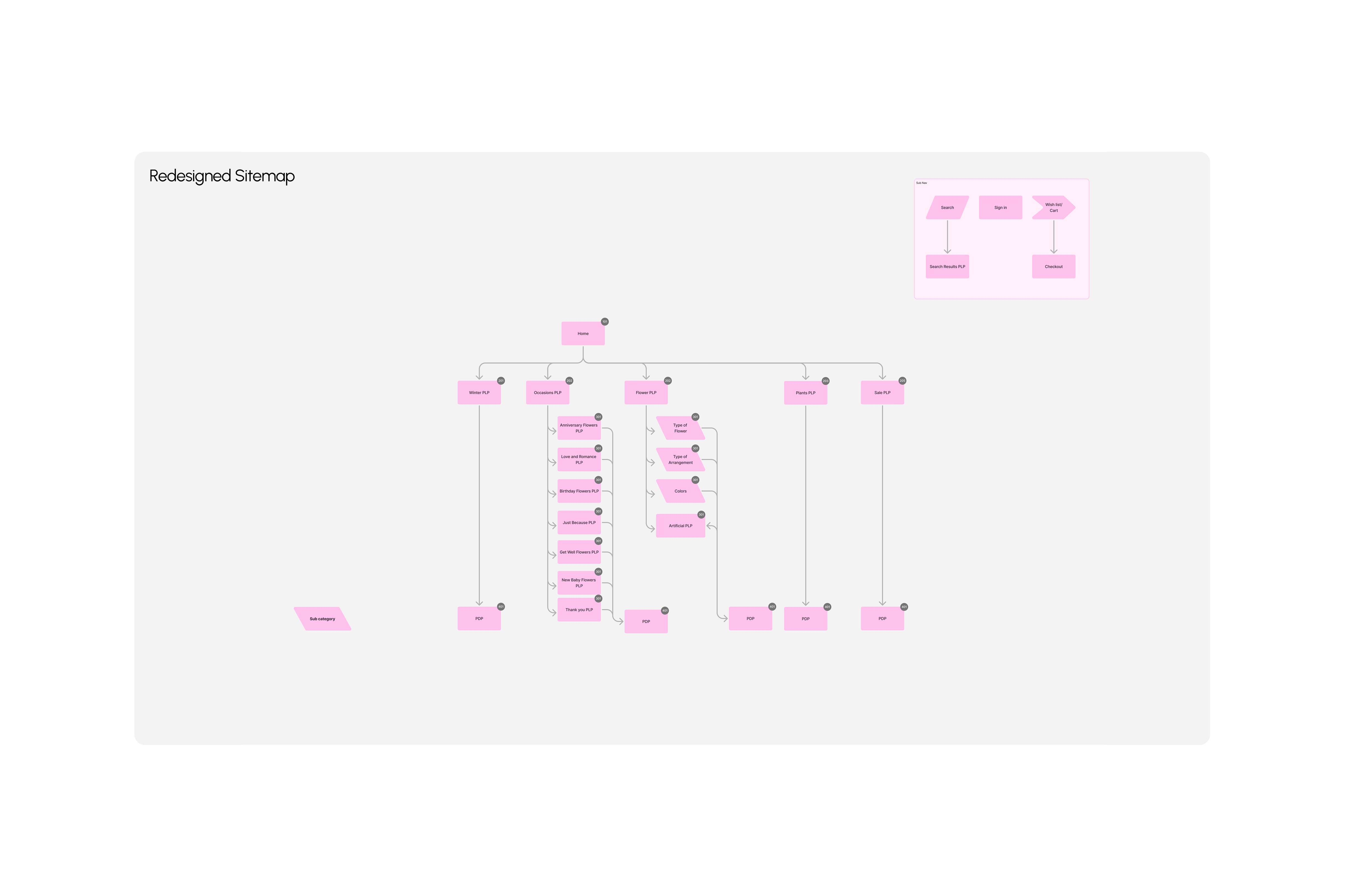
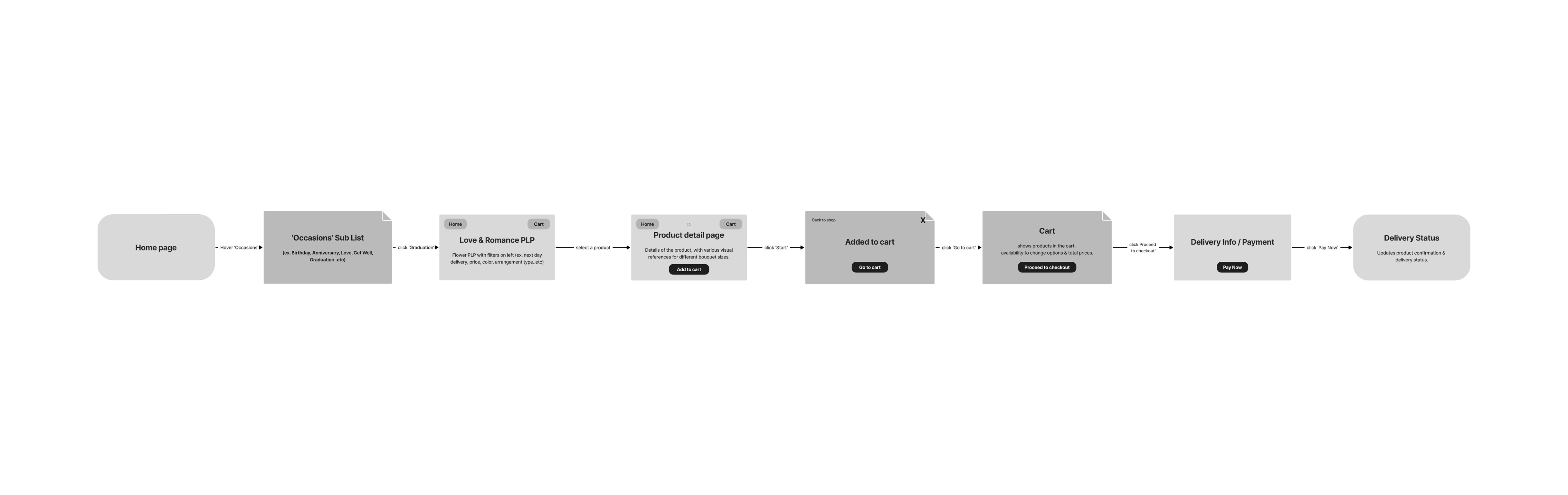
Using insights from the audit, interviews, and card sorting, I restructured the site’s information architecture and mapped out a task flow based on a realistic user scenario to better understand how users would browse and make decisions. The updated sitemap prioritizes occasion-based navigation and improves product discoverability by organizing content in a more intuitive and user-centered hierarchy.
Wireframing & Usability Test
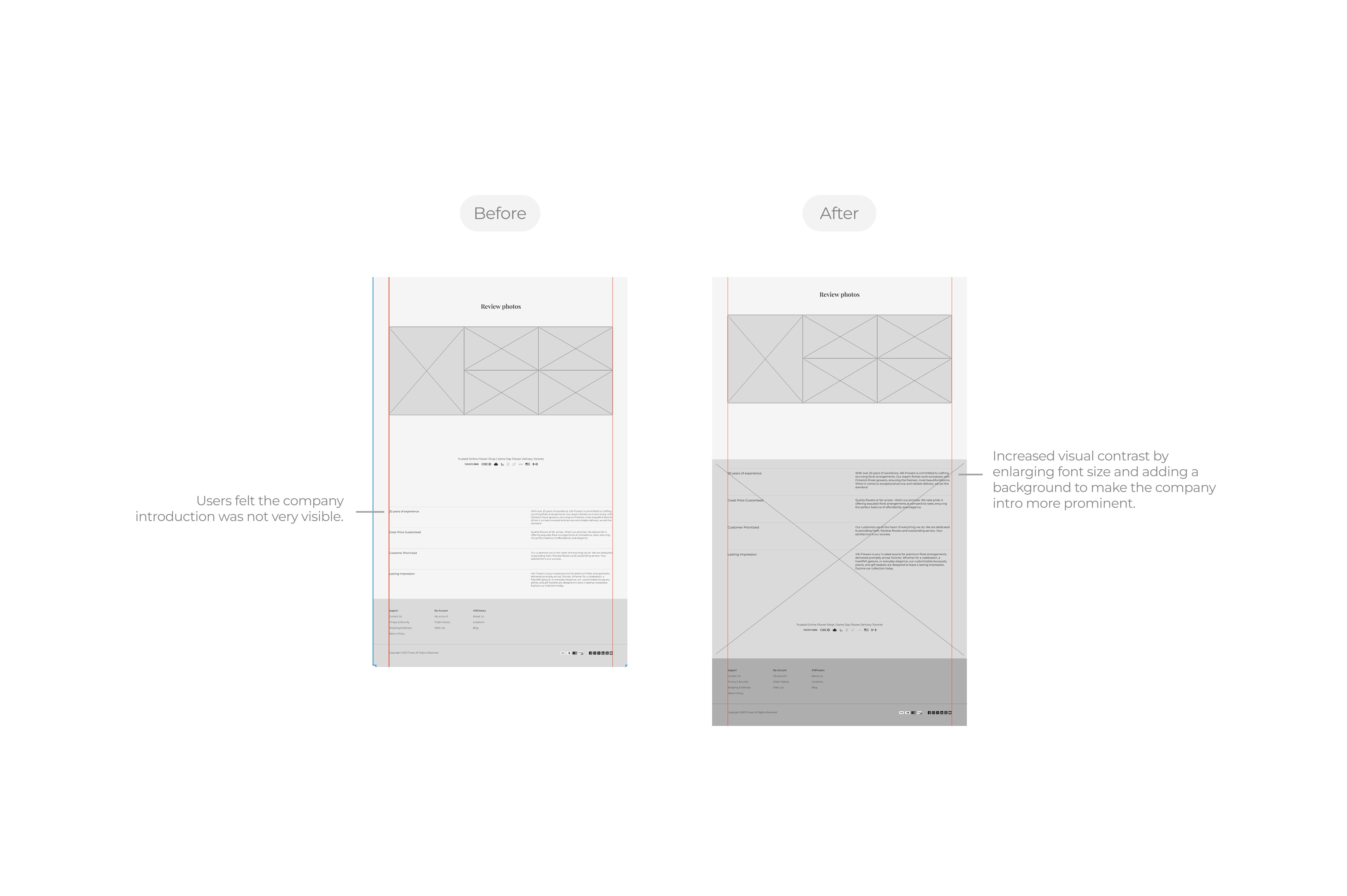
After synthesizing the research findings, I created low-fidelity wireframes to visualize the improved user flow, which were tested with four participants. All users successfully completed the full journey in under four minutes and provided valuable feedback that informed further design refinements, ultimately leading to a final prototype.
Prototype